Showing posts with label Orville and Wilbur's Accomplishments. Show all posts

Monday, April 4, 2011

Science Fair 2011

QuestionWhere has Dawn been lately?

ResearchSources indicate that Dawn has a tendency to overcommit get really involved in her community and to tell people what to do organize large events.  Satellites have tracked increased science activity in her hometown in recent weeks.

HypothesisDawn led her homeschool group's science fair committee this year.

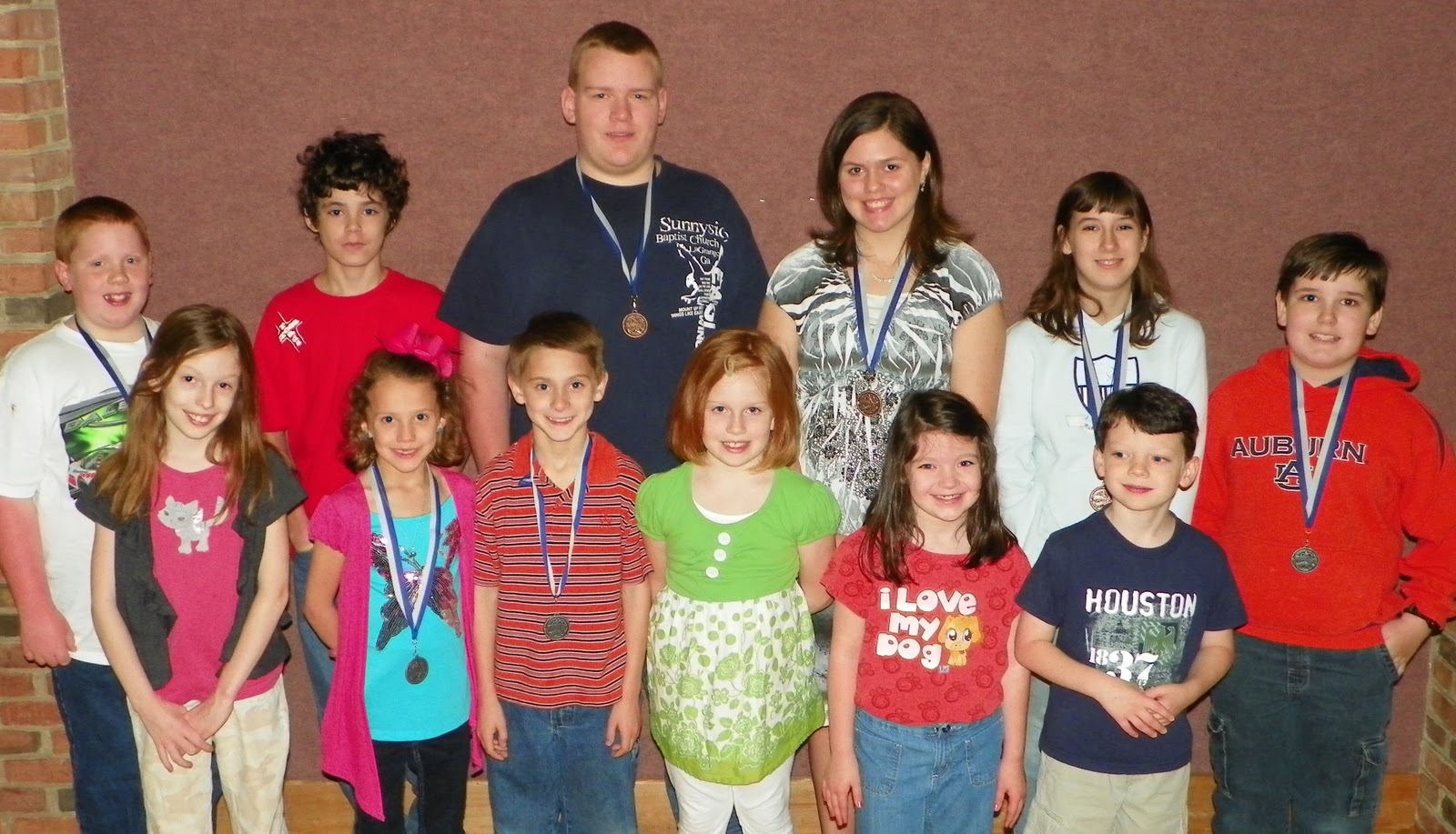
There is no need to test this hypothesis because I have photographic evidence to verify its validity!

Okay, so I'm not in this picture of all the science fair participants.
I could not find a picture of me anywhere!
I guess I was too busy
giving orders
serving the group
to pose!


I worked with six other terrific moms to organize the first annual Super Duper Home School Association (SDHSA) Science Fair!  (FYI, that's what I will be calling my local support group from here on out.  I am tired of typing "local support group" over and over again!)

The SDHSA ladies and I started working on the fair in August.  There was a lot to accomplish: writing rules, holding registration, finding judges, gathering prizes, creating a judging rubric, providing a training session, etc., etc., etc.  However, from the start, we divided the work, and I cannot believe how well everything came together!

The competition was tight, and there were soooo many fabulous projects.  Take a look at these incredible boards!


On the home front, I had two participants of my own to manage.  I demanded the boys decided that they should work together on just one project since I had my hands full leading the committee.  Of course, the one topic the boys could agree on felt enthusiasm for was bird watching. 

Here is their project...


Question:  What color feeder will attract the most birds?

Orville (left) and Wilbur (right)
in front of their feeders of different colors.
Which one do you think will attract the most birds?


Research:  Their research indicated that birds' eyes contain "more cone cells" than humans'.  For this reason, scientists believe birds see colors in saturated tones.


This picture shows the cages in a saturated hue,
a guess as to what
they look like to song birds.


Hypothesis:  The boys believed their research indicated more birds would be drawn to the brighter colored feeders, particularly yellow and red.


Are the boys correct?
Will yellow and red win?

The Experiment:  Dad spray painted four suet cage feeders in four different colors: yellow, red, blue and black.  The boys decided to leave one cage in the original green color as a control.  They also hung the cages on the same tree to prevent environmental factors, like temperature, from skewing the outcome.  They also used the same brand of suet feed for each cage and filled each with the same weight of feed.

The Control Cage

They frequently observed the cages for one week and took note of how many birds of which species visited each color.  At the end of the week, they took the cages down and weighed the amount of uneaten suet.

They repeated the test on a different tree in a different part of the yard, keeping the controls in place from the first test.  Again, they observed for one week, took notes, and then weighed the remaining contents.

Data and Results
  • Test One (from lightest to heaviest):  yellow, black, green, red and blue. 
  • Test Two (from lightest to heaviest): yellow, red, green, blue, and black.
  • Total Ranking (calculated by adding the weights from each test): yellow, black, red, green, and blue

Conclusions:  Because yellow ranked first (meaning the most was eaten from it) in both tests, the boys believe yellow is a good color for feeders.  However, because red was 2nd in one test and 4th in the other, they cannot say with certainty that their hypothesis is correct.


Orville (right) is disturbed their hypothesis was not valid.
Wilbur (left) is just happy he participated in the science fair!

While collecting data, they also noticed that more birds ate from a feeder similar in color to its body than at a feeder of a different color.  They want to do more research and testing to see if there is a correlation between body color and desired feeder color.

SDHSA awarded participants medals based on their judges' rubric score.  Everyone who participated received at least a bronze science medal.  Those whose judges' scores were between 80 and 89% of the total possible score received silver medals, and those who received scores of 90% and higher earned gold medals.  Local restaurants donated coupons for free pizza, ice cream and sandwiches, too!

Orville and Wilbur (far right) won gold medals
and took first place in their division!

Good job, Orville and Wilbur!


Bronze and Silver Medalists

Good job, science fair participants!

If you are interested in starting a science fair in your area, I would be happy to offer support.  I learned a lot the hard way this year!  Just drop me a line, and I will get back to you soon.

Happy Experimenting!
Dawn


Saturday, September 19, 2009

The National Bible Bee

I have good news and bad news. Let's get the bad news out of the way.

Orville did not qualify for the national competition. :(

Now, for the good news.

He won 2nd place at the local competition where he took the preliminary tests! He was awarded a check for $50 which was made out to him personally and sealed in a silver envelope along with a 2nd place certificate. It was such a generous prize with such nice personal touches, and he felt so special receiving it. I want to send a thank you to Stacey and everyone who helped her make our local Bee possible and so very enjoyable.


The grand prize, however, was won by all who participated. It was the time spent delving into the Word of God while meditating on and memorizing so many Bible passages. By the time of the competition, Orville had memorized 100... a feat I did not think was possible.

Actually, he did not think it possible either. When the study materials first arrived, we both felt overwhelmed. He did not really get motivated until two weeks before the competition date. Then, things just started to click. Not only could he recite the verses when called upon by his dad or me, but he started bringing Scripture up in daily conversation.

While reading a story one day, he said, "This situation makes me think of 1 Cor 10:13" Then, he went on to explain why.

When contemplating a decision another day, he recalled a verse he had learned from Proverbs and decided he needed to complete the task at hand.

He even wanted copies of audio recordings of sermons on the passages he had memorized.

When we began studying, my prayer was that he would be motivated to hide God's Word in his heart so that he might not sin against God, thinking more of later than now. I thought of him preparing for his future calling so that he would be fully equipped for every good work. A future father, teacher, missionary, leader, or "whatever else the Lord might call him to do" building up his arsenal.

I was reminded as he studied, however, that God's word does not return void. It is not something that is just stored up for the future, like an arrow sitting in a quiver waiting for the archer to pull it out and shoot it. When we memorize it, we are not tucking it neatly away for a time when it may become useful.

The Bible is profitable for teaching, rebuking, correcting, and training in righteousness... in the present. The more time we spend in the Word daily, the more we become like Christ, daily. In this article on scripture memory, John Piper gives six reasons for Scripture memorization, all of which deal with our day-to-day walk with the Lord.

So, we have a made a pledge to be more diligent in memorizing on a daily basis, even when it is not Bible Bee season. Likewise, I encourage you to get your children involved in next year's Bible Bee. Only three children out of thousands will win the big scholarships, but every child will reap the rewards of studying the Bible with such intensity.

I am thankful for The National Bible Bee and for the Shelby Kennedy Foundation and pray that God will be pleased to use this ministy to raise up a generation of men and women who will say like Jeremiah, "When your words came, I ate them; they were my joy and my heart's delight." (Jer 15:16)

Saturday, December 6, 2008

Exciting News!

I just received word that Bruster won 4th place in the 3rd grade division of Crayola's Annual On-line Art Exhibition. His art work, "Eco-Friendly Fuel," will be published in the Crayola Art Exhibition book, scheduled for release by March, 2009.

The theme of the competition was "Go Green." As a bird enthusiast, Bruster wanted to paint a picture of a bird. He had completed the winning picture earlier in the year for the Youth Birding Competition's Art Contest. He noticed that the hummingbird eats good fuel and decided to write a statement about the good stewardship of using alternative fuels.

You can see his winning art and statement here.

Congratulations, Bruster! Mommy is so excited for you!

Friday, August 22, 2008

Congratulations BT and Bruster!

I calculated the boys grades today. Both earned all A's except for one B. Good work guys.
They also get paid at the end of each six-week grading period for test grades, pages read, and final grades. They earned enough money today to buy two toys they have been wanting and put some in savings for next time.
I have enjoyed this six weeks with you, BT and Bruster. I am praying that the next six weeks will be just as profitable for you. I love you!

Wednesday, August 20, 2008

2008 Youth Birding Competition

I started this blog with many purposes, one of which is keeping a record of the birds we spot. this is a list of the birds the boys and their teamates identified in the Youth Birding Competiton in May.


Canada Goose

Brown-headed Nuthatch

Wood Duck

Blue-gray Gnatcatcher

Mallard

Eastern Bluebird

Northern Bobwhite

Wood Thrush

American Bittern

American Robin

Great Blue Heron

Northern Mockingbird

Black Vulture

Brown Thrasher

Turkey Vulture

European Starling

Red-shouldered Hawk

Golden-winged Warbler

Red-tailed Hawk

Tennessee Warbler

American Kestrel

Northern Parula

Killdeer

Cape May Warbler

Spotted Sandpiper

Black-throated Blue Warbler

Rock Pigeon

Yellow-throated Warbler

Mourning Dove

Pine Warbler

Yellow-billed Cuckoo

Prairie Warbler

Barred Owl

Black and White Warbler

Common Nighthawk

American Redstart

Chuck-will's-widow

Prothonotary Warbler

Whip-poor-will

Worm-eating Warbler

Chimney Swift

Ovenbird

Belted Kingfisher

Louisiana Waterthrush

Red-bellied Woodpecker

Kentucky Warbler

Downy Woodpecker

Common Yellowthroat

Eastern Wood-pewee

Hooded Warbler

Great-crested Flycatcher

Yellow-breasted Chat

Eastern Kingbird

Scarlet Tanager

White-eyed Vireo

Eastern Towhee

Blue-headed Vireo

Chipping Sparrow

Blue Jay

Field Sparrow

American Crow

Grasshopper Sparrow

Fish Crow

Northern Cardinal

Purple Martin

Indigo Bunting

Tree Swallow

Bobolink

N. Rough-winged Swallow

Red-winged Blackbird

Bank Swallow

Eastern Meadowlark

Barn Swallow

Common Grackle

Carolina Chickadee

House Finch

Tufted Titmouse

House Sparrow

White-breasted Nuthatch

Yellow-bellied Sapsucker

Yellow Warbler

Black-throated Green Warbler

Saturday, June 14, 2008

Learning from Mistakes

At breakfast this morning, we all reminisced about our “early” days in birding… way back in the fall of 2006. As we discussed our favorite moments, I recalled some of the boys first attempts at identifying birds...

One morning while I was washing dishes, BT (6-years-old at the time) came running from the classroom (which is in on the opposite side of the house from the kitchen), yelling, “Mommy! Mommy! I just saw a Scarlet Macaw in the back yard.” I knew it could not be a macaw, but, in case we needed to call the folks at Guinness, I went to the classroom window and took a look. To Ben’s disappointment, it was only a Northern Cardinal.

A few days later, Bruster (5-years-old at the time) yelled, “Mommy! Mommy! I see a Roadrunner.” As we live in Georgia, I was once again very doubtful, but, to be fair, I took a look anyway. Not a roadrunner… a Brown Thrasher (our state bird, btw).

As I told them these stories today, they laughed, and we all recognized how far we have come in two years. I also remembered that I have been meaning to put together a "life list" for them. This is a record that most birders keep to help them remember their sightings. So, from mounds of check lists scattered here and there, I have compiled the following list of birds the boys have successfully identified. It is not as detailed as I would like, as I have omitted when and where the birds were spotted, but it is an accurate list of what they have seen in the last two years.

As I typed this list and saw how long it is, I realized how much little kids can accomplish when we encourage them and give them the grace to learn from their mistakes.

Our Life List since 2006:

American Bittern

American Coot

American Crow

American Goldfinch

American Kestrel

American Redstart

American Robin

American White Pelican

American Woodcock

Anhinga

Bald Eagle

Baltimore Oriole

Bank Swallow

Barn Owl

Barn Swallow

Barred Owl

Belted Kingfisher

Black Vulture

Black-and-white Warbler

Black-throated Blue Warbler

Black-throated Green Warbler

Blue-gray Gnatcatcher

Blue-headed Vireo

Blue Jay

Blue-winged Teal

Bobolink

Brown-headed Cowbird

Brown-headed Nuthatch

Brown Pelican

Brown Thrasher

Canada Goose

Canvasback

Cape May Warbler

Carolina Chickadee

Carolina Wren

Cedar Waxwing

Cerulean Warbler

Chimney Swift

Chipping Sparrow

Chuck-will's-widow

Cliff Swallow

Common Grackle

Common Loon

Common Yellowthroat

Cooper's Hawk

Dark-eyed Junco

Double-crested Cormorant

Downy Woodpecker

Eastern Bluebird

Eastern Kingbird

Eastern Meadowlark

Eastern Phoebe

Eastern Screech Owl

Eastern Towhee

Eastern Wood Peewee

Eurasian Collared-Dove

European Starling

Field Sparrow

Fish Crow

Golden Eagle

Golden-winged Warbler

Grasshopper Sparrow

Gray Catbird

Great Blue Heron

Great-crested Flycatcher

Great Egret

Green Heron

Great Horned Owl

Green-winged Teal

Hairy Woodpecker

Hooded Merganser

Hooded Warbler

House Finch

House Sparrow

Indigo Bunting

Kentucky Warbler

Killdeer

Laughing Gull

Least Flycatcher

Little Blue Heron

Loggerhead Shrike

Louisiana Waterthrush

Mallard

Mourning Dove

Muscovy Duck

Northern Bobwhite

Northern Cardinal

Northern Flicker

Northern Harrier

Northern Mockingbird

Northern Parula

Northern Rough-winged Swallow

Northern Shoveler

Olive-sided Flycatcher

Orchard Oriole

Osprey

Ovenbird

Palm Warbler

Peregrine Falcon

Pied-billed Grebe

Pileated Woodpecker

Pine Warbler

Prairie Warbler

Prothonotary Warbler

Purple Finch

Purple Martin

Red-bellied Woodpecker

Red-headed Woodpecker

Red-shouldered Hawk

Red-tailed Hawk

Red-winged Blackbird

Ring-billed Gull

Ruby-crowned Kinglet

Ruby-throated Hummingbird

Rock Pigeon

Salmarsh Sharp-tailed Sparrow

Savannah Sparrow

Scarlet Tanager

Scissor-tailed Flycatcher

Spotted Sandpiper

Summer Tanager

Swan Goose

Tennessee Warbler

Tree Swallow

Tufted Titmouse

Turkey Vulture

Wild Turkey

Wilson's Snipe

White-breasted Nuthatch

White-eyed Vireo

White-throated Sparrow

Whip-poor-will

Wood Duck

Wood Thrush

Worm-eating Warbler

Yellow-bellied Sapsucker

Yellow-billed Cuckoo

Yellow-breasted Chat

Yellow-crowned Night-heron

Yellow-headed Blackbird

Yellow Warbler

Yellow-rumped Warbler